
Fresh Cuts
Caryophyllene: The Spicy, Peppery Terpene Behind Some of Your Favorite New Mexico Cannabis Strains
August 9, 2026
Walk into any New Mexico dispensary and you’ll notice cannabis smells different from strain to strain — citrusy, earthy, sweet, or sharply spicy. Those differences come down to terpenes, the aromatic compounds every cannabis plant produces, and they’re a big part of what makes New Mexico cannabis shoppers gravitate toward one strain over another. Today we’re spotlighting one of the more unusual terpenes out there: beta-caryophyllene.
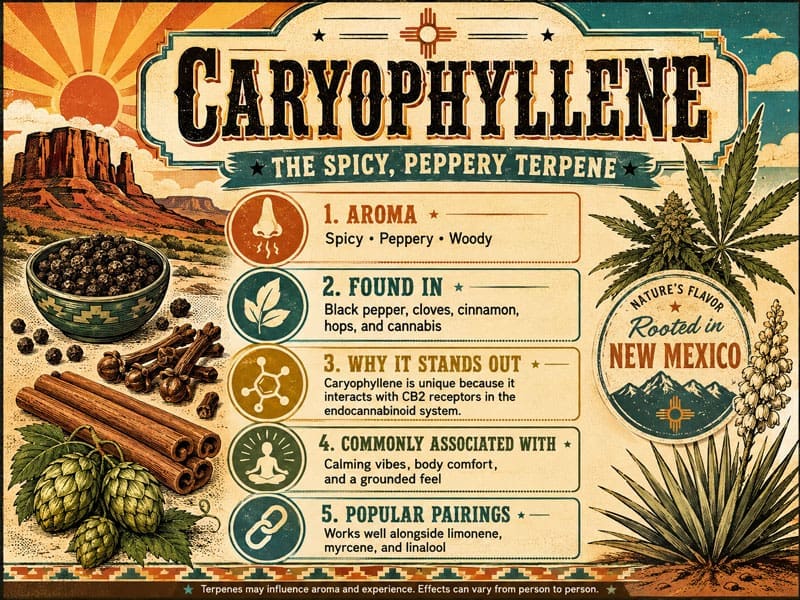
Caryophyllene is the terpene responsible for the peppery, almost clove-like bite you pick up in strains descended from OG Kush, Sour Diesel, or the Cookies family. It isn’t unique to cannabis — it’s the same compound that gives black pepper, cloves, and basil their spicy kick. If you’ve ever cracked open a jar of flower and caught a whiff of something closer to a spice rack than a citrus grove, there’s a good chance caryophyllene is behind it.
What sets caryophyllene apart from terpenes like myrcene or limonene is its relationship with the body’s endocannabinoid system. Leafly’s overview of the compound notes that caryophyllene is the only terpene currently known to directly bind to CB2 receptors, the same receptor network cannabinoids interact with, largely concentrated outside the central nervous system. That structural quirk has made it a subject of ongoing research: a 2021 review published on PubMed examined caryophyllene’s CB2-selective pharmacological properties, and researchers have continued studying its potential anti-inflammatory activity in animal and cell-based models since. Most of this research is still preclinical, and human clinical trials remain limited, so think of it as an interesting area of cannabis science rather than a settled conclusion.
Genetics grown here at High Desert Relief carry caryophyllene at varying levels depending on lineage. Crosses built on Sour Diesel or OG Kush parentage, like our Sour Diesel x Kush Mints (SDKM) or GG#4 hybrid, tend to lean into that spicier, fuel-forward profile, while fruitier or floral strains carry less of it. If you want to get more familiar with terpene and strain terminology in general, our cannabis terminology guide is a good starting point.
This post is meant as general, educational information about cannabis chemistry — not medical advice, and not a claim about what any High Desert Relief product does for a particular condition. If you’re a medical cannabis patient curious about the state’s program, our New Mexico medical cannabis program page walks through the basics.
Next time you’re browsing a New Mexico dispensary menu, whether that’s our Albuquerque stores on Coors, PanAm, and Alameda, or our Santa Fe, Bernalillo, and Hobbs locations, take a second look at the terpene profile listed alongside THC and CBD percentages. It’s often a better guide to how a strain will actually smell and feel than the strain name alone.