“What’s your highest THC flower?” It’s one of the most common questions our budtenders hear at our Albuquerque, Bernalillo, Santa Fe and Hobbs dispensaries. It makes sense: if 30% THC is good, 35% must be better, right? A big new research review says it’s not that simple. Doubling the THC you take does not double how high you feel.
The study: 41 experiments, one big question
The review, “The subjective effects of Δ9-tetrahydrocannabinol: A systematic review and dose-response meta-regression,” was published in the journal Neuroscience & Biobehavioral Reviews (Volume 188, September 2026). It was led by Isabella Goodwin of Australian Catholic University and Amir Englund of King’s College London, with co-authors from research groups in the UK, Australia and North America.
Instead of running one new experiment, the team pooled data from 41 randomized, double-blind, placebo-controlled studies covering 1,020 healthy adults. Everyone in those studies was a light user: less than twice a week and fewer than 100 times in their life. In each study, people were given a known dose of THC on one occasion and a placebo on another, then rated how high, anxious, tired, alert, calm and content they felt. Comparing against placebo matters, because just believing you’ve had THC can make people feel a little high.
What they found
The researchers used a “Standard THC Unit” of 5 mg of THC as their yardstick. That’s a measure other cannabis scientists proposed back in 2020 as a cannabis version of a “standard drink.”
- 5 mg inhaled raised the feeling of being high by about 34 points on a 100-point scale compared with placebo. It also raised anxiety by about 14 points and tiredness by about 26, and lowered alertness by about 40.
- Doubling to 10 mg raised the high only from about 34 to 39 points. That’s roughly 15% more high for 100% more THC.
- Going from 5 mg to 10 mg didn’t change anxiety, tiredness or alertness much either, according to the authors.
- Higher inhaled doses made people’s experiences more similar to each other, so bigger doses were a bit more predictable, not a lot stronger.
Pharmacologists call this a ceiling or diminishing-returns effect. The first few milligrams do most of the work, and every milligram after that adds less than the one before. As the authors put it in their write-up for The Conversation, “the high rises quickly at low doses, but extra THC soon adds less and less.”
What about edibles?
Here’s the surprise: for THC taken by mouth, the review found no clear link between dose and any of the feelings measured. That doesn’t mean edible dose doesn’t matter. Edibles take 30 minutes to 2 hours to kick in and are absorbed differently from person to person and meal to meal, so lab studies have a hard time catching a clean pattern. It’s one more reason to be patient with gummies and chocolates. Our edibles dosage chart breaks down what different milligram amounts tend to feel like, and our post on whether to chew or swallow THC gummies explains why the way you take an edible changes how it hits.
The fine print
Every study has limits, and the authors were upfront about theirs:
- Light users only. Results apply to people who rarely use cannabis. Daily consumers build tolerance, which changes the math.
- Lab settings. These were one-time sessions in research labs, not a night with friends.
- Mixed methods. The 41 studies used different THC sources (some synthetic, some plant-based), different ways of taking it and different measuring tools.
- THC only. The review looked at THC doses, not whole-flower differences like terpenes, freshness or strain.
The team says the next step is a single controlled study where the same people try the most common real-world doses.
What this means at the HDR counter
We grow and sell plenty of potent flower, and there’s nothing wrong with a high-testing jar. But this research backs up what our budtenders in Albuquerque, Bernalillo, Santa Fe and Hobbs see every day: the number on the label isn’t the whole story.
- Start low, go slow. Take a puff or two, wait 10 to 15 minutes, and see where you land before taking more. If you’re new or coming back after a break, a little goes a long way.
- More THC can mean more of the parts you don’t want. The pleasant high levels off quickly, but too much can still leave you anxious or couch-locked. Our potential side effects page covers what to watch for.
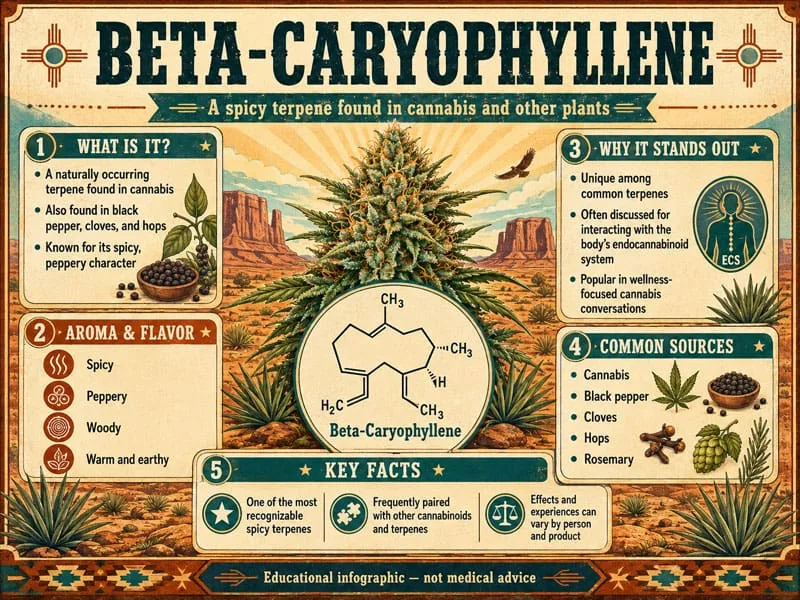
- Shop for the experience, not just the percentage. Aroma and terpenes like myrcene and caryophyllene shape how a strain feels. Browse our New Mexico-grown flower and strain library and ask us what people say about each one.
- Tolerance is real. The authors note that heavy use makes the brain less responsive to THC, so you need more for the same effect. That gets expensive. Pacing yourself keeps your stash, and your budget, going further.
- Try before you stock up. Grab a smaller amount of a new strain first, then come back for more once you know you like it.
Not sure where to start? Our budtenders are happy to help you find the right product and the right amount. Browse the menu and order ahead at your nearest HDR: Albuquerque Westside (Alameda), Albuquerque Coors, Albuquerque Pan Am, Bernalillo, Santa Fe or Hobbs.
FAQ
Does higher THC flower get you higher?
Up to a point. In this review, more inhaled THC did increase the high, but with diminishing returns: going from 5 mg to 10 mg raised the high by only about 15%.
What is a Standard THC Unit?
It’s a proposed measure of 5 mg of THC, meant to work like a “standard drink” for alcohol so people can compare doses across flower, vapes and edibles. It isn’t an official New Mexico label requirement.
Is this study about regular cannabis users?
No. Everyone in the pooled studies used cannabis less than twice a week. Regular users with tolerance may respond differently.
How much should I take my first time?
Start small. For smoking or vaping, take one or two puffs and wait. For edibles, many people start with 2.5 to 5 mg and wait at least two hours before taking more. Ask a budtender at any HDR store if you have questions.
Sources
- Goodwin I, Oliver D, Chesney E, et al., Englund A. “The subjective effects of Δ9-tetrahydrocannabinol: A systematic review and dose-response meta-regression.” Neuroscience & Biobehavioral Reviews, vol. 188, article 106795, September 2026. doi.org/10.1016/j.neubiorev.2026.106795
- Preprint of the same study on PsyArXiv: doi.org/10.31234/osf.io/w7rty_v1
- Goodwin I, Englund A. “Doubling the amount of THC in marijuana doesn’t get you twice as high, new study shows.” The Conversation, republished by Marijuana Moment, October 25, 2026.
- Freeman TP, Lorenzetti V. “‘Standard THC units’: a proposal to standardize dose across all cannabis products and methods of administration.” Addiction, 2020. doi.org/10.1111/add.14842
This article is for general information only and isn’t medical advice. Cannabis is for adults 21 and older. Don’t drive high.